Rosacea
Rosacea is a chronic inflammatory condition of the central face — flushing, persistent redness, inflammatory bumps and visible vessels. It is commonly mistaken for adult acne or simply sensitive skin, and several of the treatments people reach for make it worse.
At a glance
- What it is
- A chronic inflammatory skin condition of the central face, following a relapsing and remitting course.
- Who it affects
- Around 5% of adults worldwide. Most often begins between 30 and 60, and studies suggest a roughly equal distribution between the sexes — though men more often develop the thickening changes.
- Where
- Cheeks, nose, chin and forehead. The eyes are involved in a substantial proportion of cases.
- Key distinction
- Inflammatory bumps occur on a background of persistent redness and, unlike acne, there are no blackheads or whiteheads.
- Treatment
- Matched to the features present — different agents address redness, inflammatory bumps, visible vessels and eye involvement.
What is rosacea?
Rosacea is an inflammatory and vascular condition. Two processes underlie most of what is seen: blood vessels in the face dilate too readily and too often, producing flushing and then fixed redness; and an inflammatory response produces the papules, pustules and, over time in some people, tissue thickening.
Its origins are multifactorial and not fully understood. Recognised contributors include genetic susceptibility, an altered skin microbiome with increased density of Demodex mites, dysregulation of the immune response, and neurovascular mechanisms that make the facial vessels unusually reactive.
A change in how rosacea is approached
Rosacea used to be sorted into four fixed subtypes. Current international consensus has moved to a phenotype-based approach — assessing each feature a person actually has and treating accordingly — because in practice features overlap and most patients have more than one at once. This matters clinically: the agents that calm background redness are not the same as those that clear inflammatory bumps, and combination treatment is often appropriate.
What rosacea looks like
Most people have several of these at once, and treatment is directed at the specific features present rather than at a label.
Flushing
Transient episodes of warmth and redness.
- Triggered by heat, alcohol, spicy food, stress or temperature change
- Comes and goes, often within minutes
- Frequently the earliest feature
- Persistent flushing well beyond a few minutes is a useful clue
Persistent redness
Fixed background erythema.
- Across the cheeks, nose, chin or forehead
- Does not settle fully between flares
- Skin often feels sensitive and stings with products
- Harder to see, and so more often missed, in deeper skin tones
Papules and pustules
Inflammatory bumps — often mistaken for acne.
- Red bumps and pustules on the central face
- Occur on a background of persistent redness
- No comedones — this is the key difference from acne
- Tend to be more uniform in size than acne lesions
Telangiectasia
Small visible blood vessels.
- Fine, fixed thread-like vessels
- Most often across the nose and cheeks
- Do not respond well to creams or tablets
- Vascular laser or intense pulsed light is the usual approach
Phymatous change
Thickening of the skin.
- Gradual thickening and enlargement, most often of the nose
- Develops over years in a minority of patients
- Considerably more common in men
- Treated with surgical or laser techniques
Ocular rosacea
Frequently overlooked.
- Dryness, burning, grittiness, light sensitivity
- Inflamed, crusted lid margins
- Affects a substantial proportion — commonly cited as around half
- Can appear before any skin changes
Rosacea in deeper skin tones
Rosacea is widely described as a condition of fair, Northern European skin. It is more common in that group — but it occurs across all skin tones, and is recognised to be under-diagnosed in skin of colour.
The reason is largely one of visibility. The redness that clinicians are taught to look for is simply much harder to see against a deeper background tone, so the condition may be attributed to adult acne, sensitivity, or nothing at all. By the time it is recognised, visible vessels or thickening may be established.
Features that remain informative regardless of skin tone include persistent facial warmth or burning, skin that stings with ordinary skincare, inflammatory bumps without blackheads or whiteheads, and eye symptoms. A history of easy flushing is also useful.
Singapore's climate adds its own difficulty. Heat, sun exposure and sudden movement between hot outdoors and cold air-conditioning are among the most frequently reported triggers, and all three are hard to avoid here — which makes consistent sun protection and a settled skincare routine more important, not less.
Commonly reported triggers
Triggers vary considerably between individuals. In a large National Rosacea Society survey, these were the most frequently reported.
| Trigger | Reported by |
|---|---|
| Sun exposure | 81% of patients |
| Emotional stress | 79% |
| Hot weather | 75% |
| Wind | 57% |
| Heavy exercise | 56% |
Also commonly reported: alcohol, hot drinks, spicy food, sudden temperature change, air pollution and smoking. Certain medications — including some blood-pressure drugs and high-dose niacinamide — can provoke flushing. Keeping a diary for a few weeks is the most reliable way to identify your own triggers.
How rosacea is treated
Treatment is matched to the features present. Because most people have more than one, combination treatment is common.
The foundation
Gentle skin care and daily broad-spectrum sun protection underpin everything else — sun exposure is the single most frequently reported trigger. Simplifying an overloaded routine, and identifying and reducing personal triggers, does a great deal of the work.
For inflammatory papules and pustules
Topical options include ivermectin, metronidazole and azelaic acid. Where disease is more extensive or resistant, a low-dose oral tetracycline may be used — at this dose it acts as an anti-inflammatory rather than as an antibiotic, which limits concerns about resistance.
For redness and visible vessels
Persistent background erythema may be helped by a topical vasoconstrictor. Fixed telangiectasia responds poorly to creams, and vascular laser or intense pulsed light is the recognised approach — with device and settings chosen for your skin type. Our laser and cosmetic dermatology page explains that assessment in more detail.
For thickening and eye involvement
Established phymatous change is addressed with surgical or laser techniques. Ocular rosacea is managed with lid hygiene, warm compresses and, where needed, oral treatment — and may warrant ophthalmology input.
Living with rosacea
Skin care and trigger management are not an alternative to treatment — they are what makes treatment hold.
Helpful
- Use a gentle, non-foaming, fragrance-free cleanser
- Apply broad-spectrum sunscreen every day
- Keep a short trigger diary for a few weeks
- Introduce any new product one at a time
- Use a bland moisturiser to support the skin barrier
- Mention eye symptoms — they are treated specifically
Unhelpful
- Potent topical steroids on the face
- Harsh scrubs, alcohol-based toners and strong acid exfoliants
- Very hot showers and saunas
- Assuming it is acne and using acne products without assessment
- Stopping treatment the moment the skin improves
- Ignoring persistent facial redness as ‘just a flush’
When to see a dermatologist
Consider a specialist assessment if:
- Facial redness is persistent rather than coming and going
- You have inflammatory bumps that have not responded to acne treatment
- Your skin stings or burns with ordinary skincare products
- You have dry, gritty or irritated eyes alongside facial redness
- Visible blood vessels are appearing
- The nose or another area is beginning to thicken
- The appearance is affecting your confidence or daily life
Rosacea is diagnosed clinically. There is no specific test, and the diagnosis rests on the pattern of features, their distribution, and the history of flushing and triggers.
Rosacea is diagnosed and managed within our general dermatology service, with laser options through laser & cosmetic dermatology. Book a consultation →
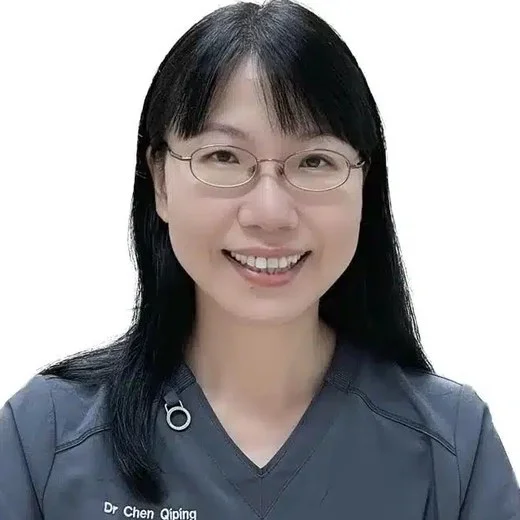
Dr Chen Qiping
Consultant Dermatologist · MBBS, MRCP (UK), M.Sc, FAMS (Dermatology)
Dr Chen practises general adult and paediatric dermatology, including rosacea, alongside surgical, laser and cosmetic dermatology. Consultations are available in English and Mandarin.
Rosacea — frequently asked questions
Is rosacea the same as acne?
Can people with darker skin get rosacea?
What triggers rosacea flares?
Is rosacea curable?
Why do my eyes feel gritty and dry?
Can I use my usual skincare?
Will laser help the redness?
References
- DermNet. Rosacea. Author: Dr Olivia Kuo, Addenbrookes Hospital, Cambridge, United Kingdom. Previous contributors: A/Prof Amanda Oakley, Vanessa Ngan. dermnetnz.org
- DermNet. What’s triggering my rosacea? By Dr Libby Whittaker; reviewing dermatologist Dr Ian Coulson. dermnetnz.org
- ROSacea COnsensus (ROSCO) panel recommendations on the management of rosacea by phenotype.
- National Rosacea Society. Rosacea triggers survey. rosacea.org
Medically reviewed by Dr Chen Qiping, Consultant Dermatologist. Last reviewed and updated: .
Persistent facial redness or bumps?
Arrange a consultation with Dr Chen Qiping at our Collyer Quay clinic — two minutes' walk from Raffles Place MRT.